
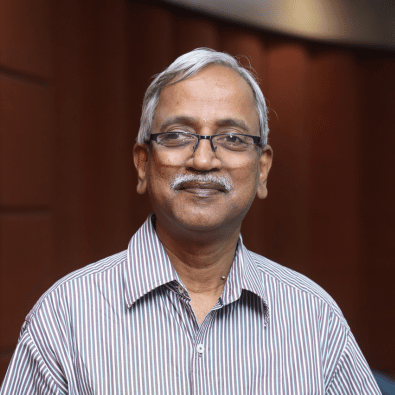
K. Narayanan
Prof. Krishnan Narayanan is a distinguished economist and faculty member at the Indian Institute of Technology Bombay, where he serves as a professor and Head of the Department of Economics. He also serves as Honorary Secretary of the Forum for Global Knowledge Sharing. His key research areas include development economics, energy and industrial economics, international business, industry-environmental linkages, and climate change.

Kamalesh Pahurkar
Dr. Kamalesh is a Research Associate at the Department of Economics Innovation Lab, IIT Bombay. He is working on the role of the creative enterprises/industries in India's economic activities. His responsibilities include conducting empirical analysis for an ongoing research project, coordinating data work and validation, and working closely with faculty collaborators on data planning and analysis.
He works in applied microeconomics, with research interests in industrial policy, firm behavior, labor markets, and trade. His research examines how policy interventions and changes in the competitive environment shape firms’ decisions and performance, industrial upgrading, and welfare. His ongoing work examines the impact of small-scale industry policy on firm performance and the effect of foreign direct investment on the product quality of domestic firms. He is also keen on exploring research questions in development economics. He completed a PhD from IIT Bombay in 2026.
Project Description:
Access to formal finance remains uneven for many self-employed and micro-enterprises operating in India’s urban informal and semi-formal sectors, particularly within creative industries that rely primarily on individual skills and intellectual capital. Despite the expansion of financial inclusion initiatives and government-supported credit schemes, creative entrepreneurs often face procedural complexities, documentation gaps, and institutional barriers that limit their ability to secure formal loans. This project examines how education and skill development intersect with access to institutional credit in shaping enterprise sustainability and growth. Specifically, the study seeks to: i) examine the extent and patterns of formal sector credit access among self-employed creative workers; ii) assess how existing lending mechanisms and public credit schemes function in practice for these enterprises; and iii) identify key institutional constraints and propose practical, evidence-based measures to strengthen financial linkages within the creative economy.

Radeef Chundakkadan
Chundakkadan’s recent research focuses on firm innovation and technology adoption, corporate finance, and the economics of gender. His work has been published in leading international journals, including Industrial and Corporate Change, World Development, Small Business Economics, Journal of Evolutionary Economics, Economic Modelling, Global Finance Journal, and International Journal of Finance and Economics. His research is widely cited, with over 100 citations in publications related to innovation.
He is the recipient of the MJ Manohar Rao Award from The Indian Econometrics Society (TIES) and the C1973 Research Excellence Award from IIT Bombay. His work has also been presented at prominent international conferences organized by the World Bank Group, Globelics, and the Forum for Global Knowledge Sharing.
Chundakkadan is currently an Assistant Professor in the Department of Economics at the Indian Institute of Technology Bombay. He earned his PhD from the Indian Institute of Technology Madras.
Project Description:
Financial constraints are a pressing issue for many business activities. A certain set of firms faces greater hurdles in accessing external funds. One such firm is a female-owned or -managed firm due to gender discrimination in the credit market. As a result, such firms register poor performance, productivity and innovation. The current study extends this strand of literature by exploring whether the obstacle to external funds suppresses environmentally friendly practices of female enterprises. Governments around the world have introduced several policies and regulations to curb environmental degradation. As part of this, governments incentives firms to begin monitoring their carbon footprints. However, such compliance often requires an initial investment, and financial constraints may be an obstacle to it. This obstacle will be ever severe on female-owned or managed firms due to gender discrimination in the credit market. Given that the objective of this study is three-fold: i) To study the nexus between the gender of the owner and carbon monitoring of the firms; ii) To study the role of access to external funds in carbon monitoring; iii) To investigate the relationship between gender equality and carbon monitoring of female-owned firms.
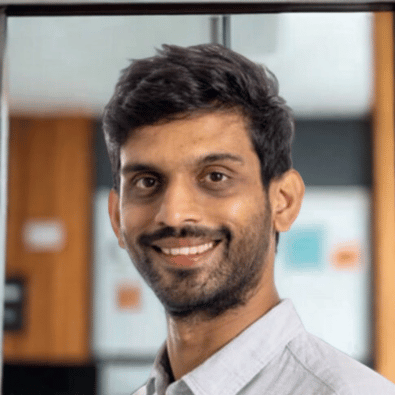
Chethan Kamath
Chethan Kamath is an assistant professor at the CSE department at IIT Bombay, where he is a member of the Theory Group and Trust Lab. While his primary area of research is cryptography, his interests extend beyond to computational complexity theory and theoretical computer science.

Arjun Bhagoji
Arjun is an Assistant Professor in the Centre for Machine Intelligence and Data Science at IIT Bombay. He received his Ph.D. from Princeton University in 2020 and a Dual Degree (B.Tech.+M.Tech) at IIT Madras in 2015, both in Electrical Engineering. Prior to joining IIT Bombay, he worked as a Research Scientist in the Department of Computer Science at the University of Chicago. His research focuses on making machine learning systems more robust and reliable, particularly for socially relevant applications. His work lies at the intersection of security and machine learning. Arjun's research has been recognized with a Spotlight at the NeurIPS 2023 conference, the Siemens FutureMakers Fellowship in Machine Learning (2018-2019) and the 2018 SEAS Award for Excellence at Princeton University. He was a Rising Star in Data Science in 2021, a finalist for the 2020 Bede Liu Best Dissertation Award in Princeton's ECE Department and a finalist for the 2017 Bell Labs Prize.
Project Description:
The growing amount of AI-generated content available online requires techniques such as watermarking to ensure that misinformation and fraud can be combated. However, existing schemes are only effective in the API or closed-source setting where watermarking can be enforced. We propose a study of the formal limits of watermarking in the open-source setting.
This project will:
1) Identify and formalize the setting in a manner that aligns with both the practice of machine learning as well as appropriate threat models,
2) Provide constructions from first principles of open-source watermarking schemes
3) Determine conditions under which watermarking of open-source is impossible.
Addressing these key research questions will enable both practitioners and researchers deploy powerful generative models safely.
K. Narayanan
Prof. Krishnan Narayanan is a distinguished economist and faculty member at the Indian Institute of Technology Bombay, where he serves as a professor and Head of the Department of Economics. He also serves as Honorary Secretary of the Forum for Global Knowledge Sharing. His key research areas include development economics, energy and industrial economics, international business, industry-environmental linkages, and climate change.
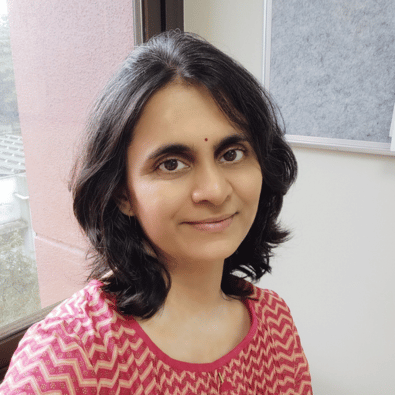
Rama Pal
Rama Pal is Professor at the Department of Economics, Indian Institute of Technology Bombay. Her primary research area is development economics with a focus on education, health, gender and inclusive development. Currently, she is working on regional disparity in learning, child health, migration, human capital formation and intergenerational mobility. She is also part of the National Disease Modelling Consortium (NDMC) anchored at IIT Bombay. Her research has been published in reputed international academic journals including Journal of Population Research, Economic Modelling, Oxford Development Studies, and International Journal of Social Economics.
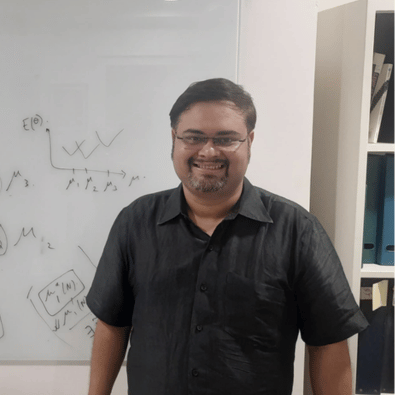
Saptarshi P Ghosh
Saptarshi P Ghosh is an Assistant Professor in the Department of Economics at the Indian Institute of Technology Bombay.

Apoorva Nair
Apoorva Nair joined as a Research Assistant in September 2026 at Department of Economics Innovation Lab housed within the Indian Institute of Technology -Bombay. The work involves conducting field survey, consulting stakeholders, supporting primary and secondary data collection, analysis and documentation, in close coordination with the faculty members and institutional partners.
Apoorva holds a postgraduate degree in Economics from Pondicherry University, with academic training in economic theory, econometric modelling, and policy analysis. Prior to joining the Lab, she gained experience in research through projects at the Centre for Development Studies, Thiruvananthapuram and Reserve Bank of India, (DEPR), Mumbai. Apoorva's research interests include Macroeconomics, Applied Econometrics, Public Finance, Development Economics, and Policy Analysis. Beyond academic work, interests include dance, art, reading and engagement with public policy and socio-economic issues.

Sneha Sutradhar
Sneha Sutradhar joined as a Research Assistant in September 2026 at the Department of Economics Innovation Lab housed within the Indian Institute of Technology, Bombay. Her work includes conducting field surveys, consulting stakeholders, and supporting primary and secondary data collection, analysis and documentation, in close coordination with faculty members and institutional partners.
Sneha holds a postgraduate degree in Applied Economics from Presidency University, Kolkata, with training in economic theory, econometrics, quantitative methods, and policy analysis. Prior to joining the lab, she worked as a Research Assistant at the Centre for Development Studies, Kerala, and presented her Master's thesis paper at an academic conference in BITS Pilani, Hyderabad. Her research interests include development economics, political economy and public policy. Beyond academic work, she loves movies, music, videography and travel.
Project Description:
Rapid technological change, particularly in AI, automation, and digitalisation, is transforming skill requirements across sectors, while gaps between educational outcomes and industry expectations continue to affect workforce readiness in India. This project seeks to understand how skill gaps are evolving and develop adaptive, industry-aligned approaches to strengthen employability and workforce readiness.
This project will:
1) Map and classify evolving skill requirements by examining transferable foundational skills alongside sector- and occupation-specific competencies
2) Examine the alignment between industry demand and educational and skilling systems through consultations with industry, educational institutions, and other stakeholders
3) Identify gaps in existing workforce development and skilling interventions, including the role of curriculum, training, experiential learning, and reskilling, and
4) Develop an integrated framework for skill-gap assessment and workforce readiness, including an industry-academia alignment framework and an immersion programme to strengthen continuous employability.
Addressing these areas will contribute towards a more adaptive approach to workforce development that enables education and skilling systems to respond effectively to rapidly changing labour-market requirements.

Tara Shankar Shaw
Tara Shankar Shaw is a Professor in the Department of Economics at the Indian Institute of Technology Bombay, Mumbai, India. His primary research areas include corporate governance, applied microeconomics, development economics, and econometrics. He has made significant contributions to understanding corporate social responsibility, firm performance, and economic inequality in India. He has published in The British Accounting Review, the British Journal of Management, Corporate Governance: An International Review, the Journal of Contemporary Accounting and Economics, the International Review of Finance, The International Journal of Accounting, and Accounting Horizons, among others. Dr. Shaw is actively involved in teaching, research, and doctoral supervision at IIT Bombay, contributing to both academic scholarship and policy-relevant research in India.
Radeef Chundakkadan
Chundakkadan’s recent research focuses on firm innovation and technology adoption, corporate finance, and the economics of gender. His work has been published in leading international journals, including Industrial and Corporate Change, World Development, Small Business Economics, Journal of Evolutionary Economics, Economic Modelling, Global Finance Journal, and International Journal of Finance and Economics. His research is widely cited, with over 100 citations in publications related to innovation.
He is the recipient of the MJ Manohar Rao Award from The Indian Econometrics Society (TIES) and the C1973 Research Excellence Award from IIT Bombay. His work has also been presented at prominent international conferences organized by the World Bank Group, Globelics, and the Forum for Global Knowledge Sharing.
Chundakkadan is currently an Assistant Professor in the Department of Economics at the Indian Institute of Technology Bombay. He earned his PhD from the Indian Institute of Technology Madras.

Pintu Parui
Pintu Parui is an Assistant Professor in the Department of Economics at the Indian Institute of Technology Bombay. Pintu Parui holds a B.A. in Economics from Jadavpur University and M.A., M.Phil., and Ph.D. degrees from the Centre for Economic Studies and Planning, Jawaharlal Nehru University, New Delhi. Pintu Parui’s research interests primarily encompass the theory of economic growth and income distribution, as well as macroeconomic theory. Pintu Parui’s research has been published in journals including the Journal of Economic Growth, Structural Change and Economic Dynamics, Metroeconomica, and the Journal of Post Keynesian Economics

Lakshmi Kalarikkal
Lakshmi Kalarikkal is a Research Assistant at the Department of Economics Innovation Lab, IIT Bombay. She joined the Lab in September 2026 and contributes to its research project through supporting primary data collection, stakeholder engagement, and assistance with research reports, and project documentations. Her research interests include Development Economics and Public Policy.
Lakshmi holds a Master of Science in Economics from NMIMS University’s Sarla Anil Modi School of Economics and a Bachelor of Arts in History and Economics from Ramnarain Ruia College, Mumbai University. Previous work experience includes internships with the BMC and the Chhatrapati Shivaji Maharaj Vastu Sangrahalaya, focused on the history of Mumbai. Other work experience includes internships with EPW Research Foundation and Godrej Archives. Lakshmi has also authored a chapter in an upcoming publication of the Somaiya School of Civilisation Studies.

Rajarshi Chattopadhyay
Rajarshi Chattopadhyay is a Research Assistant at the Department of Economics Innovation Lab, IIT Bombay. His responsibilities include stakeholder engagement, supporting primary data collection, and assisting in the preparation of research reports and project documentation in close coordination with faculty members. He joined the Lab in September 2026 and has since been contributing to various research assignments, applied policy research initiatives, and programme activities.
Rajarshi holds a postgraduate degree in Economics from Visva-Bharati University, with training in economic theory, quantitative methods, designing and conducting primary household surveys, and policy analysis. Prior to joining this lab, as a master’s dissertation, he did a comparative analysis on the effect of Microfinance in India and Bangladesh through a primary survey. His research interests include rural economics (MSME/microfinance), political economy of AI, technological change and economic thought.
Project Description:
The project aims to identify and examine the major challenges and risks faced by Micro and Small Enterprises (MSEs) in Maharashtra, including constraints related to access to finance, delayed payments, workforce and skill shortages, market competition, regulatory compliance, technology adoption, supply chain disruptions, and climate-related risks. It further seeks to understand the strategies enterprises adopt to manage these risks and to assess their awareness of, access to, and utilization of government schemes and support services. The findings will provide evidence-based recommendations to strengthen policy interventions and improve the effectiveness of support mechanisms for MSEs.